
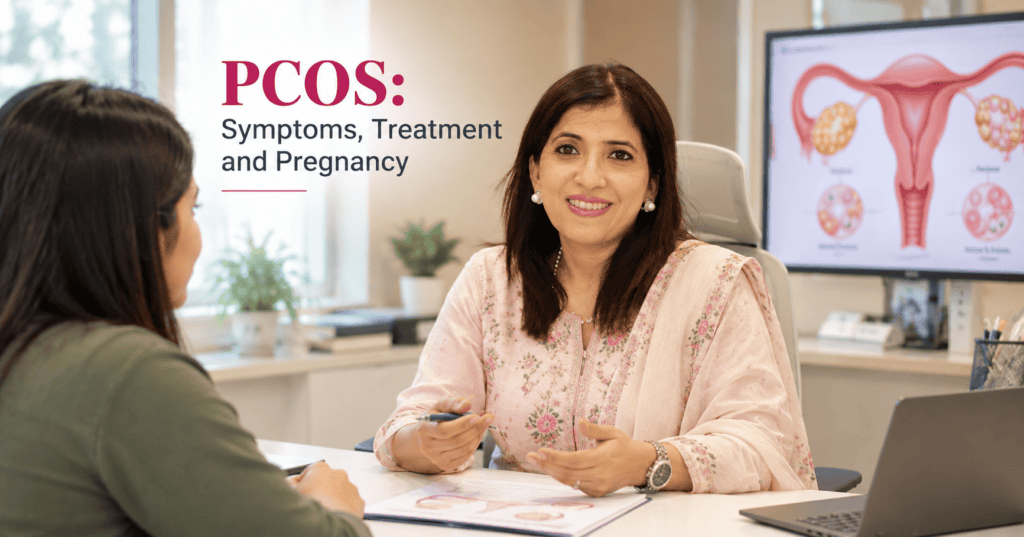
PCOS is one of the most common reasons young women visit a gynecologist in Chandigarh. Irregular periods, acne, weight gain, excess facial hair and difficulty getting pregnant can all come from the same hormonal condition, and many women live with it for years before getting a proper diagnosis.
The reassuring news is that PCOS is very manageable, and most women with PCOS can conceive with the right treatment. In this guide I explain the symptoms, how PCOS is diagnosed, treatment options, and what to expect if you are planning a pregnancy. For personal advice, you can consult a gynecologist in Chandigarh experienced in both PCOS and fertility care.
PCOS (Polycystic Ovary Syndrome) is a hormonal condition that causes irregular or absent ovulation, irregular periods, and often raised male hormones and insulin resistance. It is treated with lifestyle changes, medicines to regulate periods and insulin, and, for women trying to conceive, ovulation induction, IUI or IVF if needed. Most women with PCOS can get pregnant with timely, individualised treatment.
What Is PCOS?
In PCOS, the ovaries do not release an egg regularly. Many small follicles collect in the ovaries, which gives the “polycystic” appearance on ultrasound. These are not true cysts and do not need surgery. Hormone imbalance, especially higher androgens (male hormones) and insulin resistance, drives most of the symptoms.
PCOS vs PCOD: in everyday use in India, both terms are used for the same condition. Doctors usually prefer PCOS, because it is a syndrome affecting hormones and metabolism, not just the ovaries.
Common PCOS Symptoms
Irregular periods
Cycles longer than 35 days, fewer than 8 periods a year, or no periods for months.
Difficulty conceiving
Irregular ovulation makes natural conception harder to time.
Acne and oily skin
Often persistent beyond the teenage years.
Excess hair growth
On the face, chin, chest or abdomen (hirsutism), or thinning scalp hair.
Weight gain
Especially around the waist, with difficulty losing weight. Lean women can have PCOS too.
Dark skin patches
Around the neck or underarms, a sign of insulin resistance.
How Is PCOS Diagnosed?
PCOS is usually diagnosed when at least two of these three features are present, after ruling out other causes such as thyroid or prolactin problems:
- Irregular or absent ovulation, seen as irregular periods.
- Signs of high androgens, either on blood tests or as acne and excess hair.
- Polycystic ovaries on ultrasound.
Your gynecologist may also check blood sugar, insulin, lipid profile, thyroid, prolactin and AMH. AMH is often high in PCOS, which is different from low AMH.
Struggling with Irregular Periods or PCOS?
Book a consultation with Dr. Shikha Sardana, gynecologist and fertility specialist in Chandigarh.
PCOS Treatment Options
There is no one-size-fits-all PCOS treatment. The plan depends on your main concern: regular periods, skin and hair symptoms, weight, or pregnancy.
1. Lifestyle changes (the foundation)
Even a 5 to 10% weight loss in women who are overweight can restore regular ovulation in many cases. Focus on balanced meals with fewer refined carbohydrates, regular physical activity and good sleep. Our article on yoga poses for fertility offers a gentle way to start.
2. Medicines to regulate periods and hormones
For women not trying to conceive, hormonal pills or cyclical progesterone can regulate periods and protect the uterine lining. Anti-androgen treatment may help acne and hair growth.
3. Insulin-sensitising treatment
Metformin and supplements such as myo-inositol are used in selected women to improve insulin resistance and cycle regularity. Learn more about the role of myo-inositol in PCOS.
4. Fertility treatment for PCOS
If you are trying to conceive, treatment moves step by step:
- Ovulation induction with timed intercourse: tablets such as letrozole help the ovary release an egg, with scans to time intercourse. This is the first-line treatment for most women with PCOS.
- IUI: combined with ovulation induction when there is also mild male factor or unexplained delay.
- IVF: when simpler treatment does not work or other factors exist. Women with PCOS need careful, gentle stimulation to avoid ovarian hyperstimulation. See IUI vs IVF vs ICSI.
- Laparoscopic ovarian drilling: occasionally used in selected cases that do not respond to medicines. Read about laparoscopy services.
PCOS and Pregnancy: What to Expect
Most women with PCOS who receive ovulation treatment conceive. Once pregnant, PCOS slightly increases the risk of gestational diabetes, high blood pressure and early pregnancy loss, so good antenatal care matters.
- Get blood sugar checked early in pregnancy
- Keep weight gain healthy; see healthy pregnancy weight gain
- Stay active with doctor-approved pregnancy exercise
- Attend regular check-ups with your obstetrician
Long-Term Health with PCOS
PCOS is not only about periods and fertility. Women with PCOS have a higher long-term risk of type 2 diabetes, high cholesterol and, if periods stay very irregular for years, thickening of the uterine lining. Regular check-ups and simple lifestyle measures lower these risks significantly. Our preventive health care services can help you stay on track.
Frequently Asked Questions About PCOS
Can I get pregnant with PCOS?
Yes. Most women with PCOS can conceive, often with simple ovulation induction tablets and timed intercourse. If that does not work, IUI or IVF are effective options.
Can PCOS be cured permanently?
PCOS cannot be permanently cured, but it can be controlled very well. Many women have regular cycles and minimal symptoms with lifestyle changes and the right medicines.
What is the difference between PCOS and PCOD?
In India both terms are commonly used for the same condition. Doctors prefer PCOS because it affects hormones and metabolism, not just the ovaries.
Is letrozole or clomiphene better for PCOS?
Current evidence generally favours letrozole as the first-line ovulation induction medicine for most women with PCOS. Your gynecologist will choose based on your history and monitor the response with scans.
Does weight loss help PCOS?
Yes. In women who are overweight, losing 5 to 10% of body weight can restore regular ovulation, improve periods and increase the chance of pregnancy.
Who is a good gynecologist for PCOS treatment in Chandigarh?
Choose a gynecologist who also has fertility expertise, so both symptoms and future pregnancy plans are managed together. Dr. Shikha Sardana treats PCOS at Sector 32D and Sector 46-A, Chandigarh, for women from Chandigarh, Mohali and Panchkula.
Take Control of PCOS with Expert Care
Consult Dr. Shikha Sardana, gynecologist and infertility specialist in Chandigarh, for a personalised PCOS plan.
You can consult Dr. Shikha Sardana at Vivant Clinic, SCO 290/1, Sector 32D, Chandigarh, or at Milann Fertility Centre, Sector 46-A, Chandigarh, Monday to Saturday by appointment. Find the best gynecologist in Chandigarh on Google Maps.
This article is for general awareness and does not replace a personal medical consultation. Treatment plans, costs and outcomes vary from person to person.